Blistering and peeling on exteriors: five causes and how to tell them apart
28 May 2026 · 3 min read
Peeling paint always has a reason, and the reason decides the repair. How to read the failure before you scrape it off.
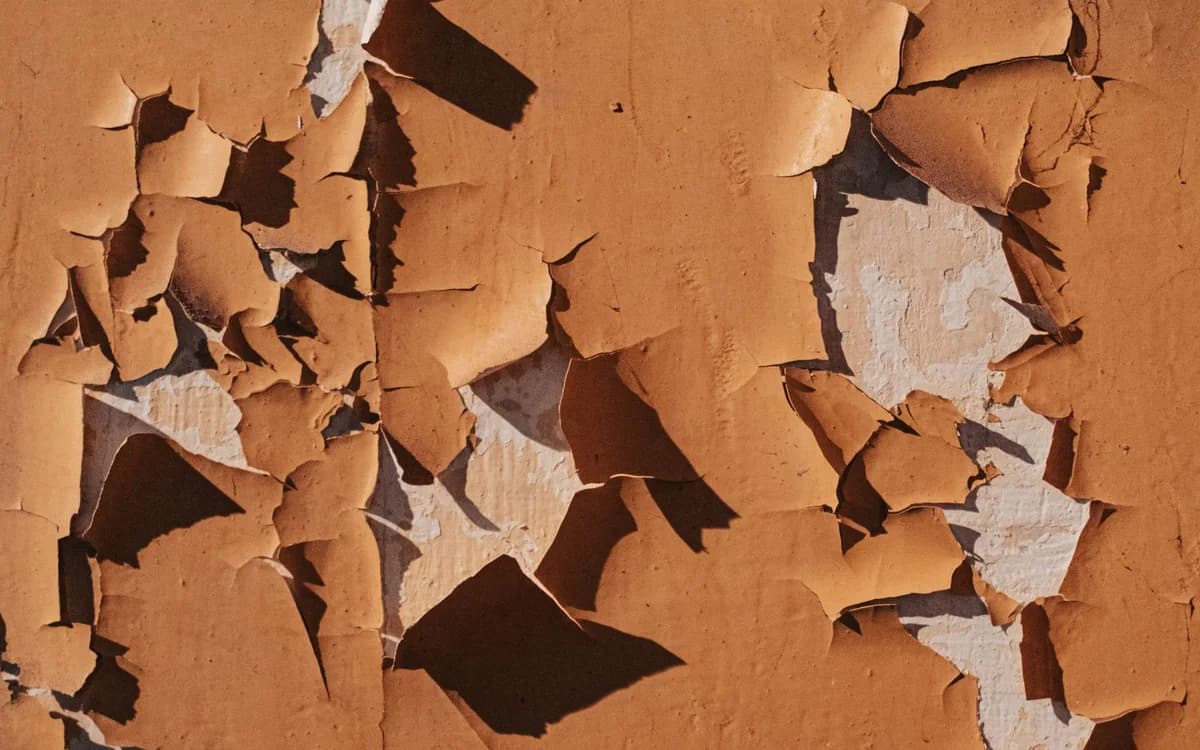
Paint does not peel because it is old. Paint peels because something broke the bond between the film and what it was stuck to. Find that, or the repair fails the same way.
Here are the five causes, and how to distinguish them.
1. Moisture from behind
**Looks like:** blisters that are soft when warm, often on one elevation only, frequently low on the wall or beneath a window. Peeling takes the coating back to bare substrate.
**Test:** pop a blister. If the substrate underneath is damp or stained, moisture is coming through the wall, not sitting on it.
**Cause:** failed flashing, a leaking gutter or downpipe, garden beds banked above the damp course, a cracked sill, or rising damp.
**Repair:** fix the water source first. Painting over active moisture is the most expensive mistake on this list, because the job has to be done twice.
2. Painting over chalk or a dirty surface
**Looks like:** large sheets lifting cleanly, often taking the previous coating with them. The back of the flake is powdery or dusty.
**Test:** rub the back of a flake. Loose pigment means the new coat was bonded to chalk.
**Cause:** inadequate washing before the last repaint.
**Repair:** remove all loose material, wash thoroughly, apply a binding sealer, recoat. Straightforward, just laborious.
3. Trapped solvent or moisture in the film
**Looks like:** small, tight blisters appearing within hours or days of painting, usually on a sun-facing wall.
**Cause:** the surface was too hot when coated, or a second coat went on before the first had properly released. The skin forms, what is underneath expands, and the film lifts.
**Repair:** sand back, and recoat under appropriate conditions. This is a workmanship failure, and it is why crews follow the shade in summer.
4. Incompatible coatings
**Looks like:** peeling confined to particular elements — often trim, doors, or a previously repaired patch — while the surrounding surface is sound.
**Cause:** water-based over an unprepared oil-based enamel is the classic. The new film has nothing to key into on a hard, glossy surface.
**Test:** rub a hidden area with methylated spirits. If the old coating softens, it is water-based; if it resists, it is likely oil.
**Repair:** sand to a mechanical key, apply a bonding primer designed for the transition, then recoat.
5. Substrate breakdown
**Looks like:** paint failing along with the material under it — timber that is soft or splitting, render that sounds hollow when tapped, rusting steel lifting the coating from beneath.
**Cause:** the substrate has failed. The coating is a symptom.
**Repair:** repair or replace the substrate. On timber, cut back to sound material. On drummy render, remove and patch. On steel, chase the rust back to bright metal and prime with an appropriate inhibitive primer.
The diagnostic shortcut
If it peels to bare substrate, suspect moisture. If it peels between coats, suspect adhesion. If the material underneath is failing, the paint was never the problem.
Why the repair has to match the cause
Every one of these is fixed by scraping, sanding and recoating — and in four cases out of five, that will hold. In the moisture case it will not, and the same blisters will be back within a season.
That is why a painter who spends the first twenty minutes of a quote walking the perimeter looking at gutters, garden levels and downpipes is doing the most valuable part of the job.