Chalking: what that white residue on your wall means
26 May 2026 · 3 min read
Wipe a hand down a sun-facing wall and it comes away powdery. What is happening, whether it is urgent, and why painting straight over it fails.
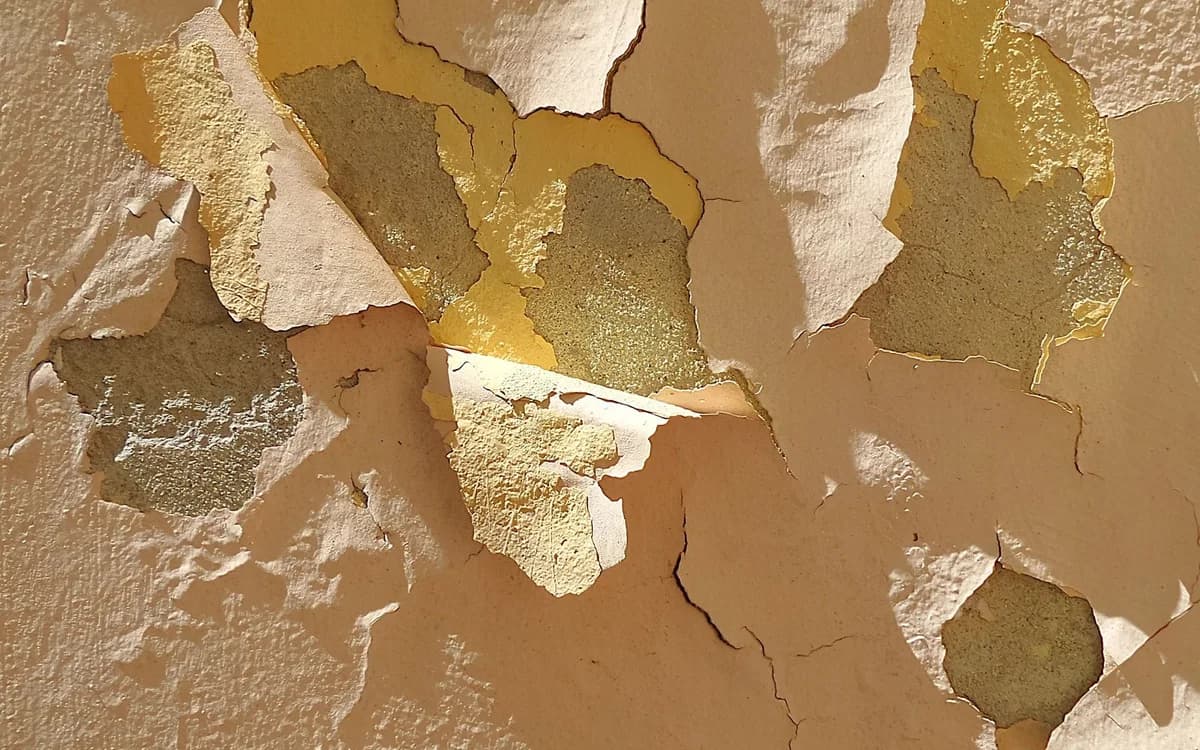
Run your hand down a north or west-facing exterior wall and look at your palm. If it is coated in a fine, pale powder, the wall is chalking.
It is the most common form of exterior coating wear in Perth, and one of the most misunderstood.
What is actually happening
Paint is pigment held in a binder. Ultraviolet light breaks down the binder at the surface of the film, and once the binder holding a pigment particle has degraded, that particle is loose. What comes off on your hand is unbound pigment.
This is a surface process, and in itself it is not a failure. It is the coating wearing the way it was designed to — slowly sacrificing its outer layer while the film underneath keeps protecting the substrate.
Why Perth chalks faster than most of Australia
Very high UV, long cloudless summers, and reflected light off light-coloured hardscaping. Add coastal salt in the western suburbs and the film degrades from two directions at once.
North and west elevations always go first. It is completely normal for one wall of a house to be chalking heavily while the south wall looks nearly new — that is not a defect in the paint, it is the sun doing what it does.
When it matters
**Mild chalking** — faint residue, colour still even — is cosmetic. The film is intact. No action needed beyond a wash.
**Moderate chalking** — obvious powder, visible fading, colour patchy across the elevation — means the coating is into the back half of its life. Plan a repaint in the next year or two.
**Heavy chalking** — thick powder, substrate showing through in places, coating thin at edges and corners — means the film has lost most of its protective value. Water is reaching the substrate. Now it matters.
Do not paint straight over chalk
This is the single most common cause of premature repaint failure. A new coating applied over loose pigment is bonded to powder, not to the wall. It looks fine on the day, and it peels in sheets within a couple of years — taking the old coating with it.
Preparing a chalking surface properly
- **Wash it.** High-pressure clean with an appropriate detergent, working systematically down the wall. This removes the bulk of the loose material.
- **Test it.** Once dry, wipe with a dark cloth. If pigment still comes off, wash again.
- **Seal it, if needed.** Where chalking was heavy, a penetrating binding sealer locks down what remains and gives the topcoat something to grip.
- **Then coat.** Two coats of a quality exterior acrylic over a properly bound surface.
Step three is the one that gets skipped, and it is the one that decides whether the repaint lasts twelve years or four.
Reducing how fast it comes back
- Higher-grade exterior acrylics use more UV-stable binders and chalk more slowly
- Lighter colours show chalking less than dark ones, though all colours chalk
- A wash every couple of years removes salt and grime that accelerate breakdown
- Deep, saturated colours on full-sun elevations will always be the shortest-lived choice
Chalking is not a fault to be alarmed by. It is a clock. Reading it correctly tells you how long you have before the wall actually needs you.