Repainting a Colorbond roof: when and how
3 July 2026 · 3 min read
The factory finish is very good and it does eventually go. How to tell when yours has, and why preparation on metal is different.
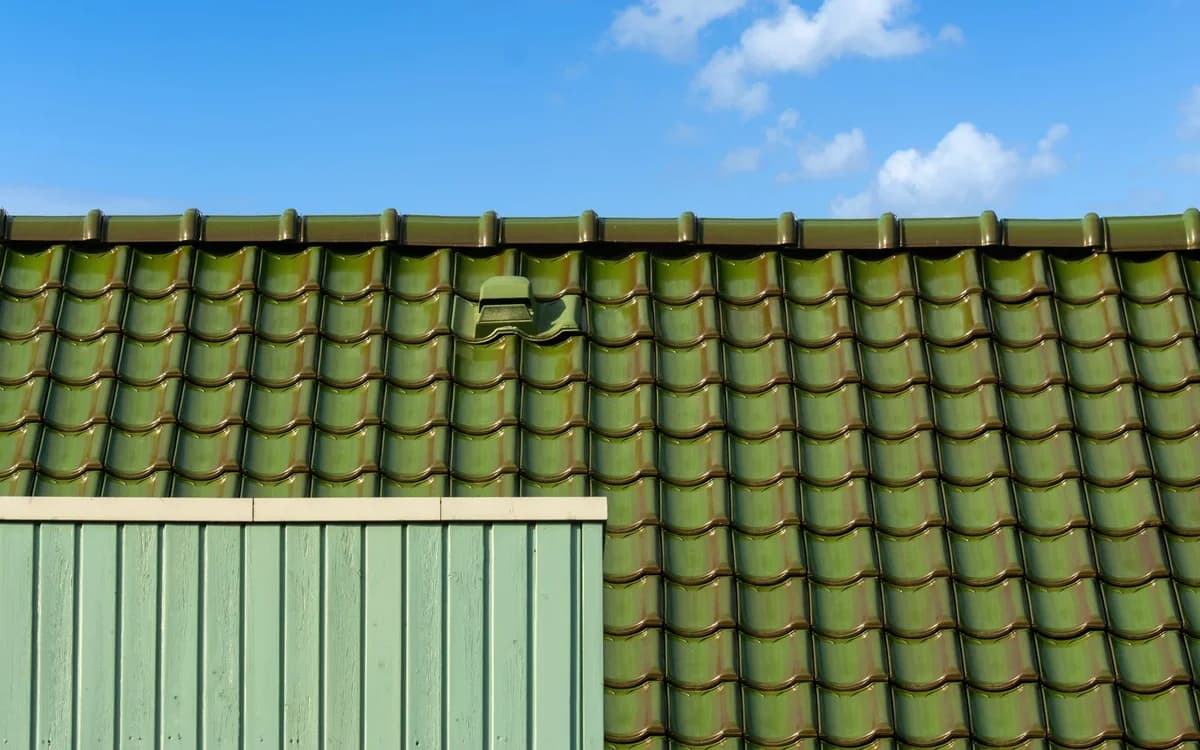
Colorbond is a factory-applied, oven-cured coating system on zinc-aluminium coated steel. It is far more durable than anything that can be applied on site, and a good roof will run twenty-five years or more before it needs attention.
But it is a coating, and coatings end.
How to tell it has gone
**Chalking.** Wipe the sheeting and look at your hand. Heavy powder means the resin has broken down.
**Fading, unevenly.** North-facing slopes fade before south. Reds and dark greens fade most visibly.
**Loss of gloss** to a dull, dry appearance.
**Surface roughness** where the film has eroded.
**Rust.** At cut edges, around fasteners, at overlaps, and anywhere the coating has been scratched. Near the coast, at any penetration.
Rust is the point where this becomes urgent rather than cosmetic. Once the steel is exposed, corrosion progresses and eventually perforates.
Why coastal roofs go first
Salt is hygroscopic — it keeps the surface damp for more hours of the day — and chloride attacks the protective layer on the steel. In Cottesloe, City Beach, Scarborough or waterfront Mandurah, a roof can need attention a decade earlier than the same roof in Midland.
Sheltered areas are worse than exposed ones, which is counterintuitive. Rain washes salt off. Under an eave, behind a parapet or on a low-pitch section that never gets rinsed, salt accumulates.
Wash the roof, seriously
On a coastal property, hosing the roof a couple of times a year — especially the parts rain does not reach — measurably extends its life. It is the highest-return maintenance available on a metal roof.
Preparation on metal
This is where metal differs from every other substrate, and where the job is won or lost.
**1. Wash thoroughly.** High-pressure clean with a detergent to remove chalk, salt, dirt and biological growth. Chalk is the number one cause of adhesion failure on repainted metal.
**2. Treat rust properly.** This is the step that gets shortcut. Rust must be mechanically removed back to sound metal — wire brushing, abrasive disc, or where extensive, blasting. Then an inhibitive metal primer immediately, before flash rust forms.
Painting over rust does not stop it. It continues under the film, expands, and lifts the coating.
**3. Check and replace fasteners.** Old roofing screws have EPDM washers that perish. A roof repaint is the natural moment to replace them — they are cheap, and a perished washer is a leak.
**4. Prime.** Bare metal needs an appropriate primer. Sound existing Colorbond that has been washed and dulled generally needs an adhesion primer rather than a full metal primer.
**5. Coat.** Two coats of a roof-grade membrane rated for metal.
Products
Use a roof-specific system, not a general exterior acrylic. Roof coatings are formulated for thermal cycling — a metal roof can swing from below 10°C at dawn to over 70°C in the afternoon — and for water that sits rather than runs.
Heat-reflective formulations are worth considering. On a metal roof the surface temperature reduction is genuinely significant, and the roof space runs cooler.
What repainting cannot fix
- Perforated sheeting. That is replacement.
- Failed flashings and penetrations. Sealant and flashing work, not paint.
- Structural sag or fastener pull-through.
- Condensation in the roof space, which is a ventilation and insulation problem.
The honest economics
A Colorbond roof repaint costs meaningfully less than a re-roof and, done properly on sound sheeting, buys a long extension. Done badly — over chalk, over rust, without fastener replacement — it can fail within three years and you will have paid for the preparation twice.
There is very little middle ground on metal. Preparation is the entire job.