Concrete tile roof restoration: what the process should be
5 July 2026 · 3 min read
Eroded surface slurry, lichen and grit in the gutters. What a proper restoration includes and the corners that are usually cut.
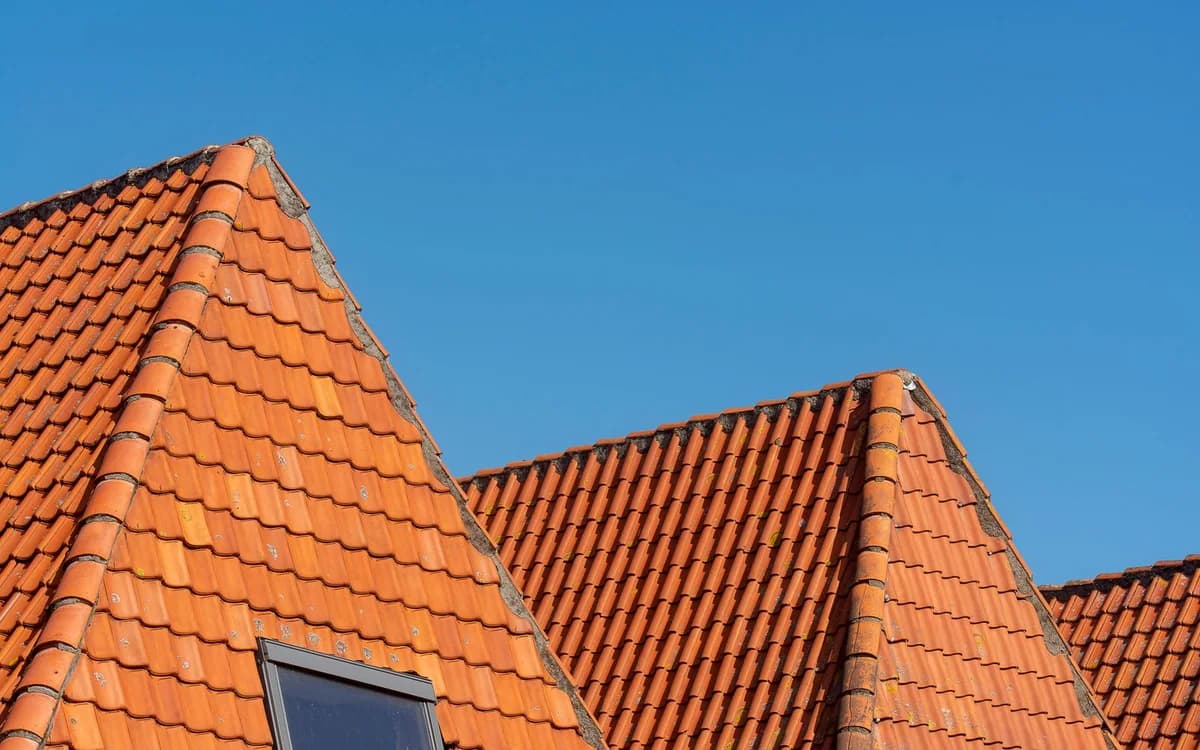
Concrete tiles were the standard roof on Perth housing from the 1960s through to the 2000s, which means a very large number of them are now at the age where the surface has gone.
What has actually worn out
A concrete roof tile is not coloured all the way through. It is a grey concrete body with a coloured cement slurry applied to the surface and, usually, a sealer over that.
That surface layer weathers. UV, thermal cycling and rain erode it, and after twenty to thirty years it is largely gone. What is left is the porous concrete body, which:
- Absorbs water, so the roof gets heavier when wet
- Holds moisture, so lichen and moss establish easily
- Sheds grit continuously, which is what fills your gutters
- Looks patchy and grey regardless of its original colour
Restoration re-establishes a sealed, coloured surface. On this substrate it genuinely works, and it genuinely extends the life of the tile.
The process, in order
**1. Inspection.** Walk the roof. Count broken and slipped tiles. Check ridge and hip caps for cracked or missing pointing. Check valleys for corrosion and debris. Check flashings at penetrations, and the condition of the sarking where visible.
**2. Replace broken tiles.** Before cleaning, so the roof is sound to walk on.
**3. High-pressure clean.** This is what produces most of the visible transformation. It removes lichen, moss, dirt, and the loose remains of the old surface. It is also messy, and gutters need to be cleared afterwards.
**4. Re-bed and re-point the ridge caps.** Bedding is the mortar the cap sits on; pointing is the flexible compound over the joint. Old sand-cement pointing cracks and falls out, which is a leak path and a wind-uplift risk. Modern flexible pointing compound is the correct material.
This is the most commonly omitted step, and it is the one with actual structural consequence.
**5. Treat for lichen and moss.** A biocide, so growth does not re-establish under the new coating.
**6. Second inspection.** Cleaning always reveals damage the dirt was hiding. Cracked tiles and failed valleys show up now.
**7. Prime.** Porous tiles absorb a great deal of primer. A sealer designed for concrete tiles, applied generously.
**8. Two coats of roof membrane**, sprayed, with attention to the laps and the cut edges.
Cleaning is not restoration
A "roof restoration" that is a pressure wash and two coats, with no pointing work and no tile replacement, is a paint job on a roof with unresolved defects. Ask specifically what the quote includes for ridge capping.
Things worth knowing
**The gutters will need clearing** after the clean, and probably again after the first rain. Grit continues to come off for a while.
**Sarking matters.** Older Perth roofs often have no sarking under the tiles. That is not something restoration changes, and it means wind-driven rain and dust can enter the roof space. Worth knowing about, not worth pretending a coating solves.
**Solar panels complicate it.** Panels have to be removed and reinstalled to do the roof underneath properly, and that is an electrical trade. Get that priced before you commit.
**Colour changes the heat load.** A lighter roof colour reduces roof space temperature noticeably. If your ceiling insulation is thin, this is a real comfort gain.
Expected life
A properly restored concrete tile roof should run ten to fifteen years before it needs recoating, and the tiles themselves will last considerably longer for having been sealed.
A poorly restored one — over lichen, without priming, without pointing — can look tired in three, and the pointing failure will have progressed the whole time under a nice new colour.