Dark exterior colours in Perth: what they cost you
15 July 2026 · 3 min read
Charcoal and black exteriors look excellent and behave badly in this climate. The real trade-offs, and how to have one anyway.
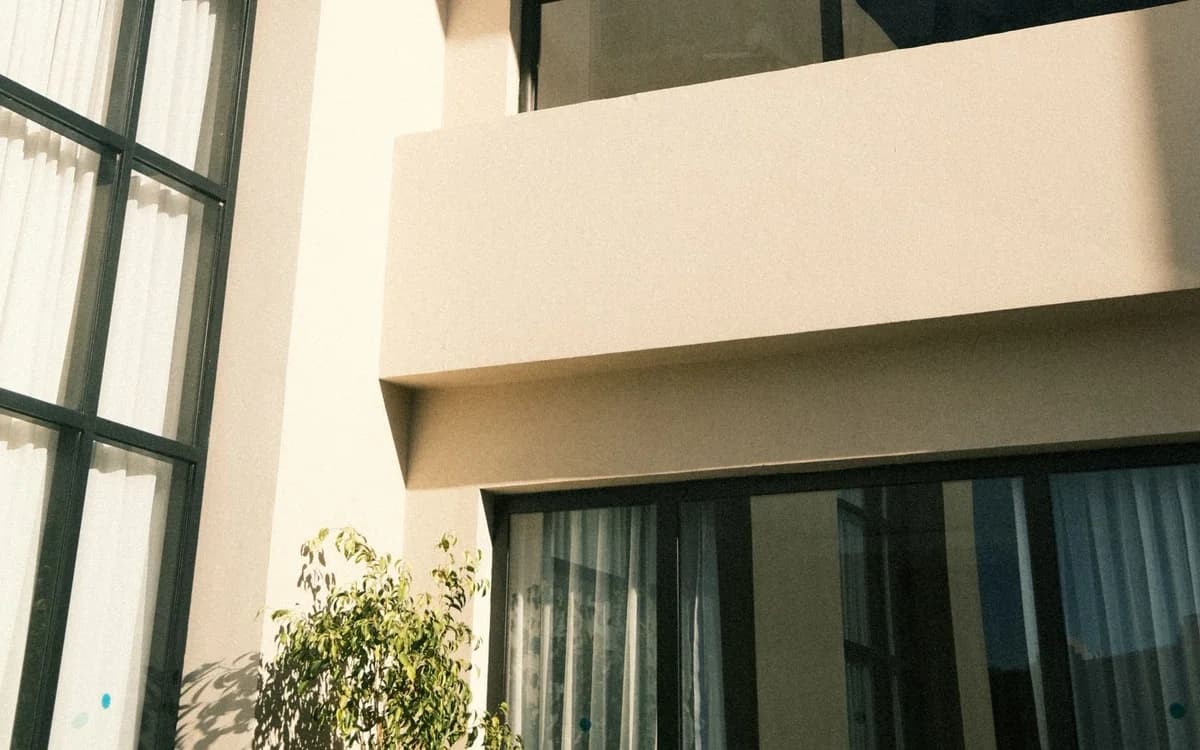
Dark exteriors have been the dominant look in Australian residential design for over a decade. They photograph beautifully, they make a house look contemporary, and in Perth they are the hardest-working colour choice you can make.
None of that means do not do it. It means know what you are buying.
The heat
A dark surface absorbs most of the solar radiation striking it; a light one reflects most of it. On a west-facing Perth wall in February, that difference is not subtle.
Approximate peak surface temperature, west wall, 38C day
Roughly ambient plus 10
Beyond many products' service range
These are surface temperatures, not air temperatures, and they have three consequences.
Consequence one: the coating works harder
Most exterior coatings are specified for service up to a certain temperature. A near-black wall in full Perth sun can exceed it. The film ages faster, the binder degrades faster, and fading is more visible because there is more pigment to lose.
Expect a meaningfully shorter repaint cycle on dark walls — typically several years less than the same product in a light colour on the same wall.
Consequence two: thermal movement
The wall expands and contracts more, every single day. That movement is transferred into the coating and into the substrate.
On render, it opens hairline cracking sooner and more widely. On timber, it works the joints. On a large, unbroken dark rendered elevation, hairline map cracking within a few years is common and it is not a product defect — it is the wall moving.
Consequence three: the house is hotter
Wall colour affects internal comfort less than roof colour does, but on a west-facing wall with poor insulation it is measurable in the late afternoon, which is exactly when a Perth house is already struggling.
Doing it well anyway
**Use it where the sun does not.** South and east elevations take dark colours with far less penalty. A dark south wall and a lighter north wall is a legitimate design decision, not a compromise.
**Use it in panels, not fields.** Dark on a feature panel, an entry recess, a garage door or the window frames gives most of the look with a fraction of the exposure.
**Specify for it.** Some manufacturers produce ranges formulated for dark exterior colours, using infrared-reflective pigments that give the visual darkness with meaningfully lower heat absorption. On a dark Perth exterior this is worth asking for by name.
**Prepare better.** A dark wall shows every crack, patch and repair, and it moves more so it produces more of them. The preparation standard has to be higher than the same job in cream.
**Accept a low sheen.** Higher sheens on a large dark wall exaggerate every undulation and every thermal crack. Low sheen ages far better.
The colour you choose is a maintenance decision
Nobody minds a shorter repaint cycle if they knew about it at the start. What causes complaints is discovering it at year five. If you want the charcoal, have the charcoal — just budget the cycle honestly.
Where dark genuinely works best
Rendered walls under a deep eave or verandah. Recessed sections. Feature panels beside a lighter field. Window frames and joinery. Garage doors. Anything shaded for part of the day.
Where it is hardest: a large, unshaded, west-facing rendered wall on a two-storey house. That is the maximum-difficulty case, and it is worth being honest about before it is quoted rather than after it cracks.