Decking: oil, stain or paint?
7 July 2026 · 3 min read
Three finishes with genuinely different maintenance cycles and failure modes. Which suits a Perth deck, and which one you will regret.
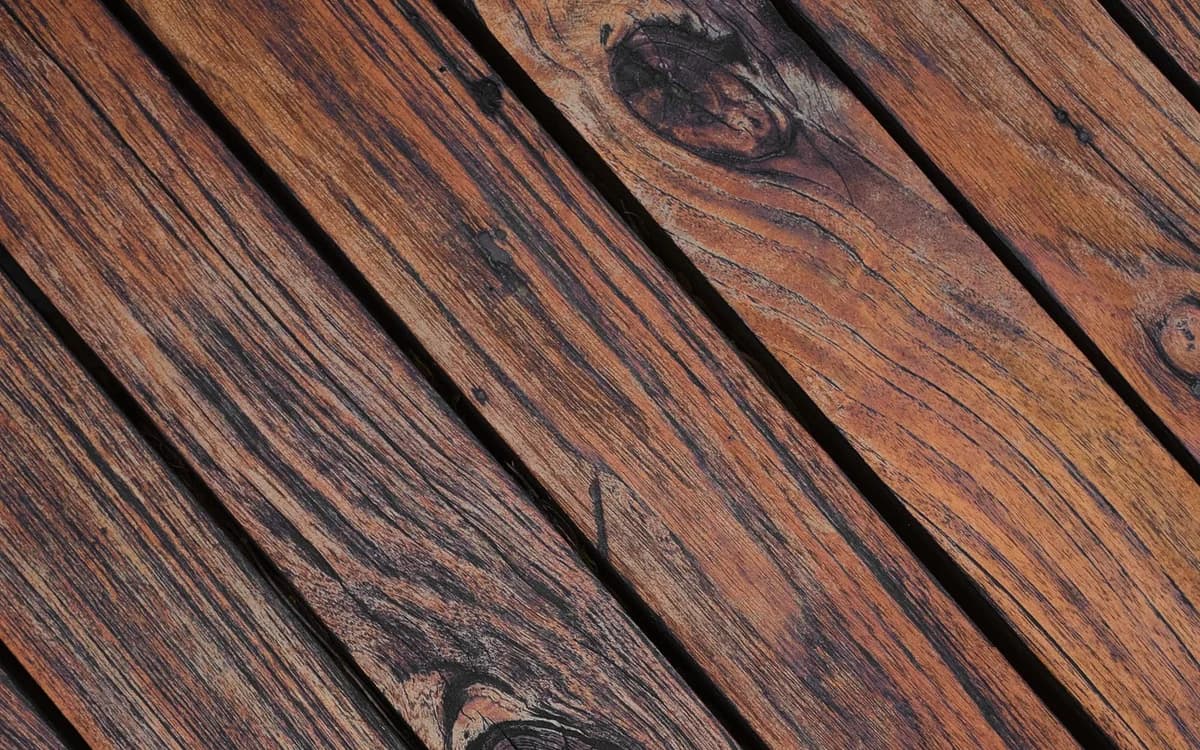
A deck is the hardest-working exterior surface on a house. It takes full sun, foot traffic, water, furniture and, in Perth, a five-month dry season followed by winter rain. The finish you choose determines what maintaining it looks like for the next decade.
Decking oil
**What it does.** Penetrates the timber rather than forming a surface film. Feeds the fibres, repels water, and carries UV absorbers to slow greying.
**Maintenance cycle.** Annual, sometimes twice a year on a full-sun deck in Perth.
**How it fails.** Gracefully. It wears thin and fades. It does not peel, because there is no film to peel.
**Recoating.** Easy. Clean, dry, apply. No sanding back required in most cases.
**Best for.** Jarrah and other hardwoods where you want the grain visible. Anyone who accepts an annual job in exchange for never facing a strip-back.
Decking stain
**What it does.** Sits between oil and paint. Penetrates partly and leaves a light film, with more pigment than oil — which means more UV protection, since pigment is what blocks UV.
**Maintenance cycle.** Two to three years.
**How it fails.** Semi-transparent stains wear thin and fade, mostly gracefully. Solid-colour stains have more film and can flake at wear points.
**Recoating.** Clean, light sand at wear areas, recoat.
**Best for.** People who want longer between coats than oil gives, and are happy with a slightly more uniform, less natural look.
Decking paint
**What it does.** Forms a full surface film. Maximum UV protection, complete colour control, hides timber that has seen better days.
**Maintenance cycle.** Five years plus, in theory.
**How it fails.** Badly. It peels, and it peels at the worst places — high-traffic boards, board ends, around fixings, and anywhere water sits.
**Recoating.** This is the problem. You cannot simply recoat peeling deck paint. You have to remove it, which on a deck means sanding or stripping every board, including between them.
**Best for.** Genuinely almost nothing on a horizontal deck.
Paint on horizontal decking is the decision people regret most
Vertical timber — cladding, posts, balustrade — takes paint well, because water runs off it. A deck holds water at every fixing and every board joint, gets walked on, and the film fails from below. Once it has, you own a stripping job.
The Perth-specific pressures
**UV.** Extremely high. Unprotected hardwood greys within months.
**Thermal movement.** Boards expand and contract more here than in a temperate climate, working any film at the joints.
**The wet-dry cycle.** Five dry months then winter rain. Timber that has dried out and shrunk absorbs quickly when the rain arrives, moving joints and stressing coatings.
**Coastal salt** on top of all of it in the western suburbs.
What we actually recommend
**Hardwood deck, natural look:** decking oil, annually, before summer. Simple, forgiving, and it never traps you.
**Hardwood deck, less frequent maintenance:** a semi-transparent stain on a two to three year cycle.
**Pine or treated softwood deck:** a solid-colour stain. Softwood does not have the grain to be worth showing, and the extra pigment gives protection it needs.
**Deck already painted and peeling:** strip it properly, then move to oil or stain. Recoating over failing paint just moves the problem a year down the road.
Preparation, whichever you choose
- Clean thoroughly — a deck cleaner or oxalic-based brightener lifts grey and opens the grain
- Replace split, cupped or rotten boards
- Punch protruding fixings below the surface
- Let the timber dry properly — moisture content matters, and a deck that looks dry after rain often is not
- Apply thin coats, following the board full length to avoid lap marks
The one-line answer
On a horizontal Perth deck, oil or stain. Save the paint for the balustrade.