Lead paint in older Perth homes: how to tell, and what to do
2 August 2026 · 4 min read
Homes painted before 1970 very likely contain lead. Sanding it is genuinely dangerous. Here is how to identify it and what safe removal actually involves.
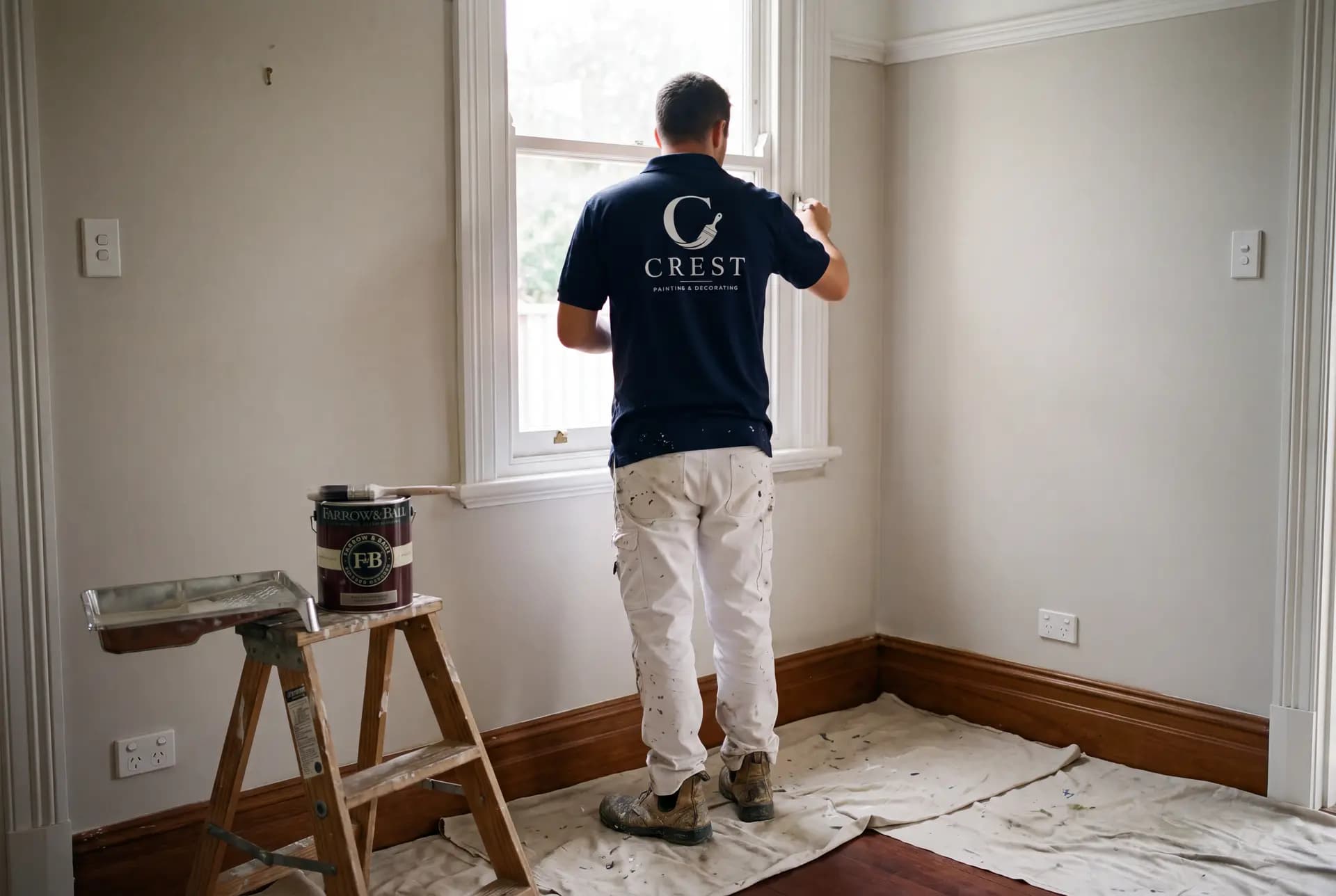
If your home was built or last repainted before about 1970, assume it contains lead paint until tested. This is not a scare — it is the standard working assumption for anyone in the trade, and it changes how the job has to be done.
Why it matters
Lead is a cumulative neurotoxin. It is most dangerous to young children and to pregnant women, and the exposure route that matters in a repaint is not the intact paint on the wall — it is the dust created when that paint is disturbed.
Sanding a lead-painted surface produces a fine dust that settles across the whole house, stays in carpet and soft furnishings, and is easily ingested. Dry sanding lead paint with an orbital sander is one of the most effective ways to contaminate a home.
Intact lead paint is generally safe. Disturbed lead paint is not.
If the surface is sound and undamaged, the safest thing is often to leave it undisturbed and coat over it. The danger is created by sanding, scraping, heat-stripping and demolition — that is, by preparation.
How to tell if you have it
**Age is the strongest indicator.** Australian domestic paint contained high lead levels until the 1960s, with a progressive reduction through the 1970s and much stricter limits from the 1990s. A federation or interwar Perth home that has never been fully stripped almost certainly has lead somewhere in the layers.
**Where it hides.** Even in a house that has been repainted many times, the original lead layer is still there underneath — on window frames, door frames, skirtings, weatherboards and eaves. Trim and joinery are the highest-risk elements because they were traditionally finished in enamel, and enamels carried the highest lead loads.
**Testing.** Home test swabs are available and are reasonable as a first screen, but they test only the surface layer. A surface swab on a wall repainted in 2005 will come back negative while a lead layer sits four coats down. Laboratory analysis of a paint chip taken through all layers is the reliable method.
What safe work looks like
If lead is confirmed or assumed, the job changes:
- **No dry sanding.** Wet sanding, or sanding with a HEPA-filtered vacuum attached to the tool.
- **No open-flame or high-temperature stripping.** Heating lead paint above roughly 450 degrees vaporises the lead, which is worse than dust.
- **Containment.** Plastic sheeting to contain the work area, with controlled access.
- **Waste capture.** Sheeting laid to collect every chip and all the wash water, bundled and disposed of appropriately — not swept into the garden, and not washed into the stormwater drain.
- **Occupant management.** Children, pregnant women and pets out of the work area entirely for the duration.
- **Cleaning.** HEPA vacuum and wet wipe-down, not a broom. Sweeping re-suspends the dust you just created.
Encapsulation: the option most people should take
Where the existing coating is sound, the best approach is usually not to remove it at all. Clean it, lightly key it by wet sanding where adhesion demands, and coat over it with a sound modern system. The lead stays where it is, sealed under an intact film.
This is cheaper, faster and safer than stripping. It is the right answer for the large majority of lead-painted homes.
Stripping becomes necessary when the existing coating has failed — flaking, blistering or heavily crazed — because there is nothing sound to encapsulate.
What drives the cost difference on a lead-painted interior
Extra care, wet methods, cleaning
Containment, waste handling, slower work
Rarely necessary
Asbestos is a separate question
Older homes often contain both, and they are not the same problem. Asbestos in eaves, cladding and wet-area sheeting must not be disturbed by anyone other than a licensed removalist. If we suspect asbestos, we stop work and tell you — we do not sand it, drill it or cut it.
What CREST does on a pre-1970 home
We assume lead until told otherwise. We do not dry sand. Where the coating is sound we recommend encapsulation and explain why. If stripping is genuinely necessary we will tell you what that involves and what it costs before you commit, and if the scope is beyond safe on-site handling we will say that too.
If you are doing it yourself
The single most important thing: do not dry sand, and do not use a heat gun on high. If you take nothing else from this article, take that. Wet methods, a HEPA vacuum, and a P2 respirator — and keep children out of the house.