Mould in bathrooms: why it keeps coming back after painting
2 August 2026 · 4 min read
Painting over mould does not kill it, and anti-mould paint is not a cure. What actually stops it returning, and the one thing most bathrooms are missing.
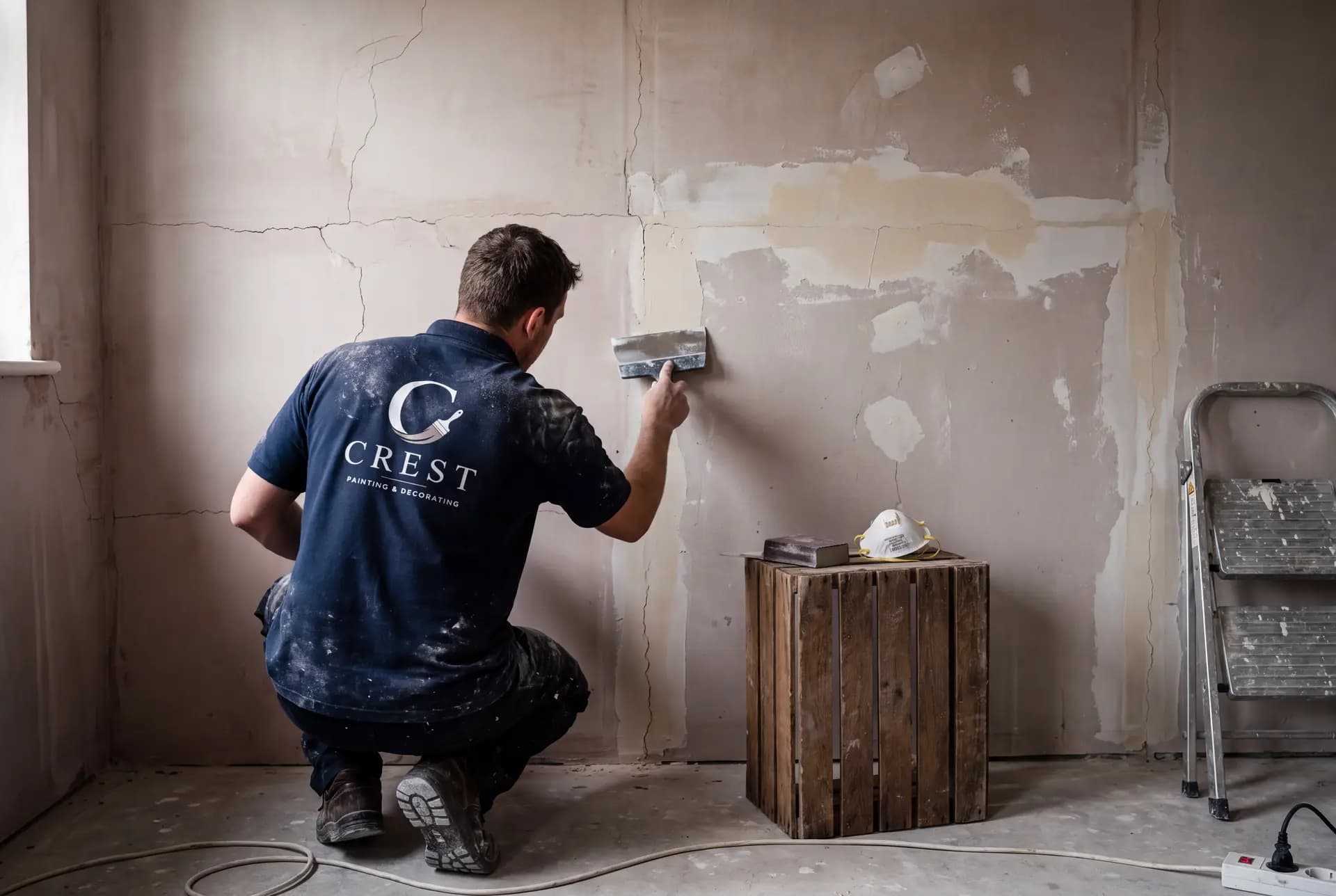
Mould on a bathroom ceiling is the single most common interior problem we are called about, and the single most commonly mis-fixed.
The reason it comes back is almost always the same: the mould was painted over rather than removed, and nothing changed about the conditions that grew it.
What mould actually needs
Three things, and you only have to remove one:
- **Moisture** — condensation on a cool surface
- **A food source** — dust, soap residue, and the surfactants in some paints
- **Still air** — nothing to carry the moisture away
Bathrooms provide all three by design. A hot shower puts a remarkable amount of water into the air, and a ceiling is the coolest surface in the room, so that is where it condenses.
Why painting over it fails
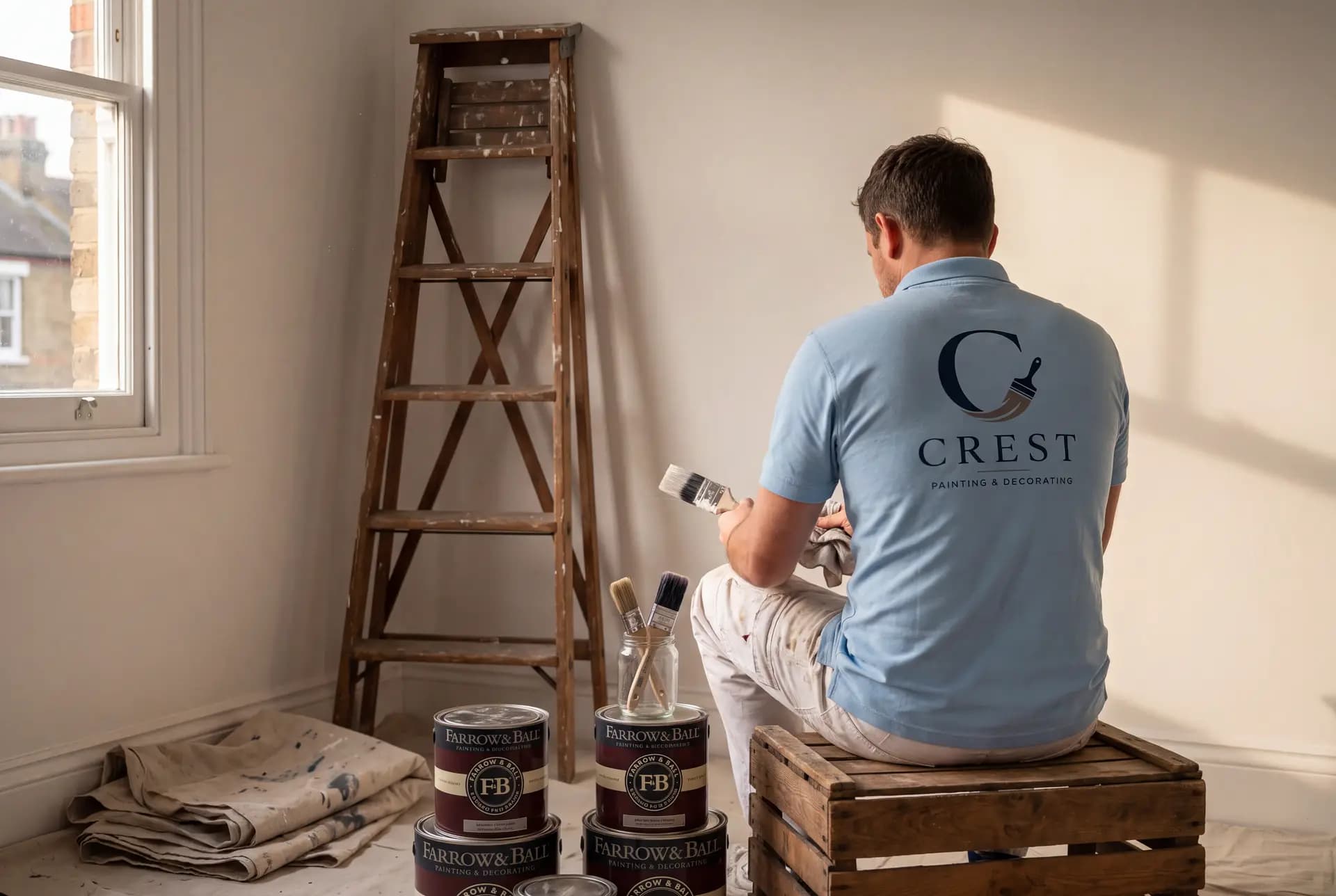
Mould is a living organism with a root structure that penetrates the coating and, in some cases, the plasterboard behind it. Rolling paint over it does three things:
- Hides it for a few weeks
- Gives it a fresh food source in the new film
- Seals moisture into the substrate underneath
It will be back, and it will usually be worse, because it is now growing under a layer that is holding moisture against it.
Bleach is not the answer either
Household bleach removes the colour from mould without reliably killing it — the surface looks clean while the organism is intact. The stain disappears, you paint, and it returns through the new coating. Use a proper fungicidal wash, not chlorine bleach.
What actually works
1. Kill it, then remove it
A fungicidal wash, left on for the contact time on the label, then physically removed. Contact time matters more than scrubbing — most people wipe it off far too quickly.
2. Find out why the surface is cold
This is the step that gets skipped. Mould in one corner of a ceiling is telling you that corner is colder than the rest. Common causes:
- Missing or displaced insulation directly above that spot
- An exhaust fan that vents into the roof space rather than outside
- A thermal bridge at a junction between structures
- A shower with no exhaust at all
3. Fix the ventilation
How long moist air lingers after a ten-minute shower
The mould case
The target
The single highest-value change in most bathrooms is running the exhaust fan for fifteen to twenty minutes *after* the shower, not during it. A cheap timer switch does this automatically and costs less than one repaint.
Also worth checking: many Perth bathroom fans vent into the roof cavity rather than through the roof or eave. That moves the mould problem into your ceiling space rather than solving it.
4. Then paint
Once the surface is clean, dry and the ventilation is addressed, a wet-area coating with a fungicide in the film is worth using. But understand what it does: it makes the surface hostile to growth for a period. It is a delay, not a cure, and on a ceiling that is still condensing it will be overwhelmed.
What we do on a mould job
We wash with a fungicidal solution and leave it the full contact time. We check the ceiling for cold spots and tell you what we find. We seal with a stain-blocking primer so the discolouration does not bleed through. Then two coats of wet-area coating. If the cause is structural or ventilation, we will say so — we would rather tell you than come back in a year.
When it is not just mould
Black staining that follows a straight line, or appears on a wall rather than a ceiling, may not be condensation mould at all. Straight-line staining often tracks a leak or a framing member. If the plasterboard is soft to the touch, stop — that is water damage and it needs a different trade first.
The honest position
We can make a mouldy bathroom look excellent. Whether it stays that way depends on ventilation and insulation, which are not painting. Any painter who tells you their paint alone will permanently solve recurring mould is selling you a repeat visit.