Why your paint is not covering in two coats
7 June 2026 · 3 min read
Two coats is the standard, not a guarantee. The colours and surfaces that genuinely need a third, and the shortcuts that cause the problem.
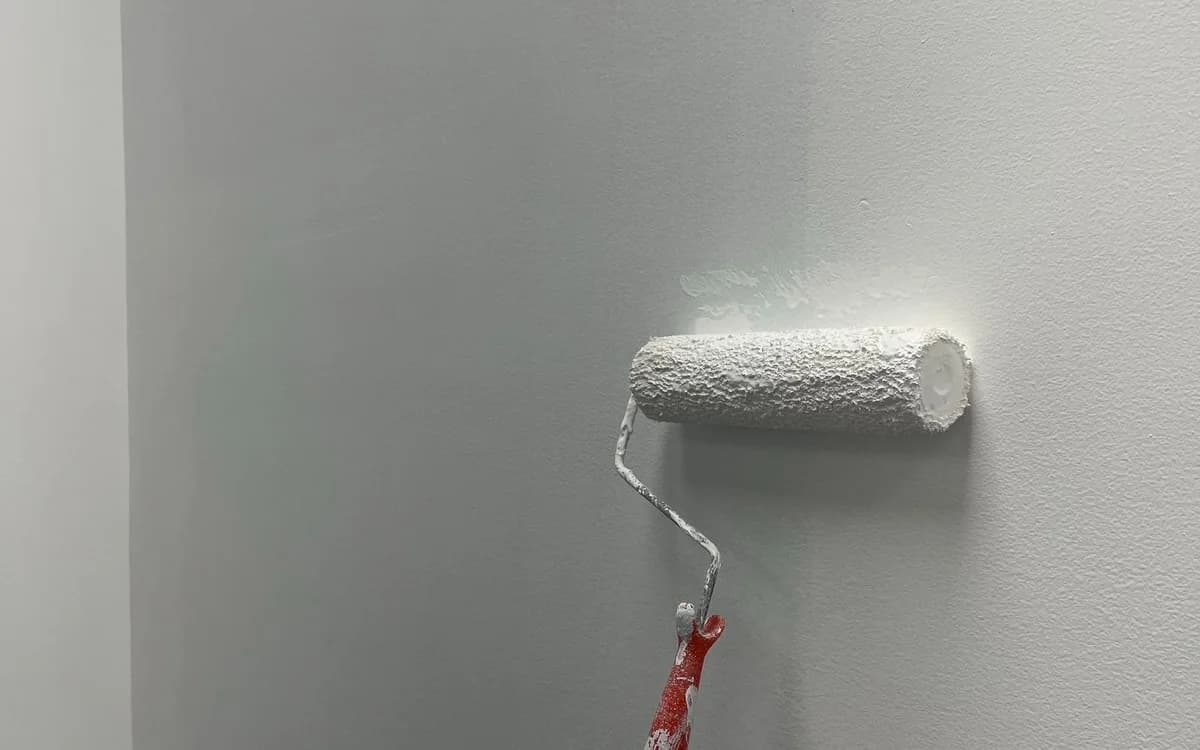
Two coats over a properly prepared, primed surface should give you a uniform finish. When it does not, there is always a specific reason, and most of them are predictable before the first tin is opened.
Colours that were never going to cover in two
Hiding power depends on the pigment. Some pigments are simply less opaque, and no amount of quality compensates.
- **Strong yellows and oranges.** The pigments are transparent by nature. Three coats is normal, four is not unusual.
- **Bright reds.** The same problem, worse.
- **Deep, saturated colours generally.** A dark base with very little white pigment has little to hide with.
- **Very bright whites over anything warm.** Whites rely on titanium dioxide, and a strong yellow or beige underneath keeps reading through.
The answer is a **tinted primer**. A grey or colour-matched primer under a difficult colour does more for coverage than an extra finish coat, and costs less.
Ask before you commit to the colour
A painter who knows the product will tell you at quote stage that your chosen red needs three coats. That is not upselling — it is the difference between a quote that holds and a variation later.
Surfaces that drink
**New plasterboard.** Untreated board and the joint compound over it absorb at completely different rates. Without a sealer, the joints show as a different sheen through the finish — flashing. New board needs a dedicated sealer, not a thinned topcoat.
**New render and masonry.** Highly absorbent and often alkaline. Needs the right sealer or the topcoat is drawn in unevenly.
**Patched areas.** Filler is more absorbent than the surrounding painted wall. Spot priming patches is not optional; skip it and every repair telegraphs through.
**Previously unpainted timber.** End grain in particular will take as much as you give it.
Application faults
**Spreading too far.** Every product has a stated spread rate on its data sheet. Stretching a tin past it gives a thinner film that cannot hide. This is the single most common cause, and it is invisible until the second coat dries.
**Over-thinning.** Thinning improves flow and reduces hiding. A little is sometimes correct; a lot is a false economy.
**Recoating too early.** A second coat over a first that has not properly released can lift or blend into it rather than building on it.
**Poor tools.** A worn roller or the wrong nap for the surface leaves an uneven film. Deeper texture needs a longer nap to reach into it.
Cheap paint
Higher-grade paints carry more solids — more pigment and binder, less water. That is most of what you are paying for, and it shows up directly as hiding power. A builder-grade white can genuinely need three coats where a premium one needs two, at which point the cheaper product has cost more in labour than it saved in materials.
How to tell which problem you have
| Symptom | Likely cause |
|---|---|
| Patchy where the old colour was strongest | Insufficient hiding — needs another coat or a tinted primer |
| Joints or patches visible as sheen differences | No sealer or no spot priming |
| Even but thin, roller texture visible | Spread too far or over-thinned |
| Coverage fine except over repairs | Filler not spot primed |
| Streaks following roller direction | Recoated too early, or a worn roller |
The honest position
A quote should state the number of coats and the primer. If a difficult colour needs three, that belongs in the quote rather than being absorbed silently or discovered halfway through. Two coats is a convention that suits most jobs, not a law of physics.